You nominated, you voted. Thanks again for the participation, support, and love over all the years. We look forward to keeping this alive as long as you are all still out...
Podcast Episode 822 is now live
One November Friday.
Brand new music from Factory Floor, Surya Botofasina, Modern English, Her New Knife, Café Alé, Chuck Roth, Spooky-J, and The Black Dog, plus music from the vaults by Foetus, Joseph Victor Sieger, P.G. Six, and Juan Atkins & Moritz von Oswald present Borderland.
Things for Sale in Upstate NY photo submitted by Brenton.
Get involved: subscribe, review, rate, share with your friends, send images!
It is certainly nice to see that Sleep have reformed and begun touring again, but Om has always been my favorite of Al Cisneros’s projects by a country mile and there has been a very large Om-shaped hole in my heart since 2012 that has thus far not been filled by Cisneros’s post-Om run of solo dub releases. While I enthusiastically love both dub and Cisneros’s reinvention as a minimalist bass-wielding psychedelic visionary, nothing has ever come close to fully recapturing the magic of early Om’s hypnotically shifting and organically alive bass-and-drum epics. This latest single, however, is a revelatory exception to that trend, as Cisneros enlisted a small ensemble of like-minded collaborators to re-envision the Sabbath-indebted stoner doom of Sleep’s classic “Dragonaut” as an old school-style Jamaican dub-reggae banger. The result is an instant Cisneros classic.
Like many of Al Cisneros’s solo releases, “Dragonaut Dub” is essentially just a single, but this one is a bit longer than usual as it features a pair of B-sides dedicated to the late Witch bassist and beloved underground music lifer Dave Sweetapple. The single is definitely where the main action is, however, as “Dragonaut Dub” absolutely rules right from its first notes and beautifully channels most of the best bits of both Om and Sleep with some notable enhancements. Killer central riff? Check! “Dragonaut” has one of Sleep’s finest, in fact. Fluid, freeform bass riffage and shamanic vocals? Check! Are the lyrics about riding a fucking dragon into space? Hell yeah they fucking are.
This latest installment of Kevin Martin’s impressive run of killer lady-centric collaborations brings back Tokyo-based chanteuse Masumi Yamamoto for a welcome second appearance. Billed as a “lower, slower, even more wasted transmission” than the duo’s Portishead-esque previous single “Miss U”, Ladybug 3 otherwise repeats its predecessor’s winning palette of crawling bass throb, cavernous percussion echoes, frigid-sounding hiss, and sensuous R&B-inspired vocals for another suite of lurching, slow-motion “Brutalist dub-tech” juggernauts. Unsurprisingly, the single itself (“If”) is yet another half-sultry/half-haunted gem, but the most compelling bit remains the many inventive ways in which Martin repeatedly deconstructs it into a series of cold and crawling mechanized dub nightmares.
Much like the previous two Ladybug EPs, Ladybug 3 is best appreciated as a series of increasingly fucked and weird mutations on the original single (though the original version of “If” is already quite a characteristically fucked and weird starting point). There is an actual sultry and soulful “pop song” at its heart, of course, but the accompanying music is a stark, frigid, and lurching marriage of undulating slow-motion bass throb, hissing texture, and echoing snare hits. That is undeniably expected stylistic terrain for both Martin in general and the Ladybug series in particular, but the duo spice things up a bit this time around with some smeared and curdled vocal harmonies. Unsurprisingly, “If” is another fine slab of creeping, nocturnal, and undead-sounding Bristol-style trip-hop with a strong vocal hook, but the primary allure of this EP again lies in descending deeper into the rabbit hole of frayed and decayed deconstructions that follow.
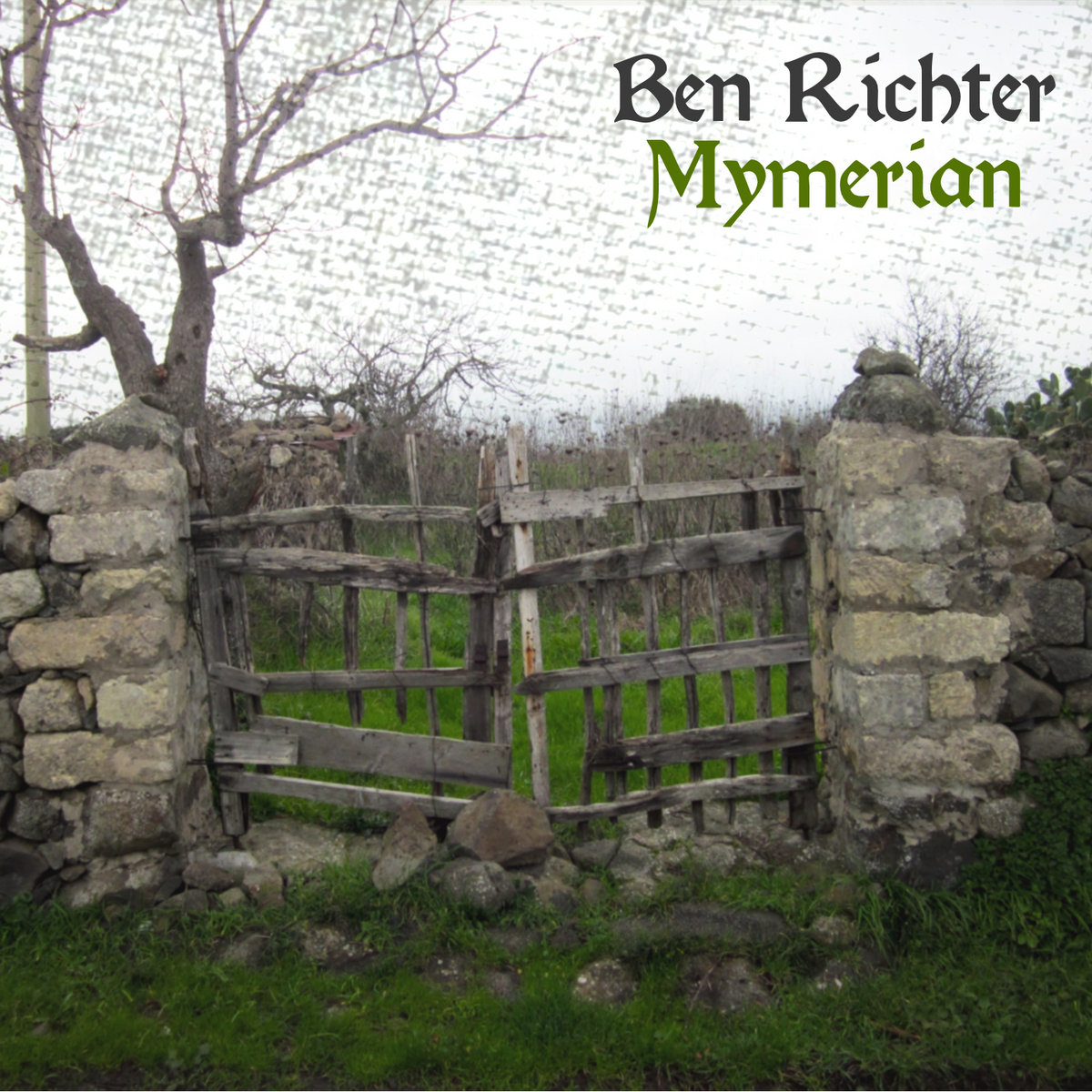
Recorded on a frigid late winter/early spring day in March 2025, the environment in which Mymerian was created aligns well with the coldness of its sound. Ben Richter (organ and accordion) was joined by Laura Cetilia (cello) and Mike Bullock (contrabass) in this performance, resulting in three icy compositions that perfectly channel the bleakness of that time of year, which is I mean as a strong compliment about the confluence of ambience, performance, and composition found here.
Like the most recent release on the Sedimental label (Kassel Jaeger’s A Rift in the Horizon’s Wall), Mymerian was recorded at Epsilon Spires in Brattleboro, Vermont. A former church but now a performance space, the venue’s natural ambience complements the sound impeccably, and the 1906 pipe organ present in the sanctuary of the building that Richter utilizes results a unique space for this trio to perform in. The framework of Mymerian is built upon deep, droning tones that are impacted by the effect of the low temperatures on the instruments’ tuning. The variation in pitch and becomes an essential part of the performance, which complements the fact that the trio are all followers of Pauline Oliveros’ Deep Listening aesthetic, making for a focus on expansive, meditative sound.
S∞S is a collaboration between Mexican multimedia artists Concepción Huerta and Daniela Huerta (no relation), both of whom have released solo albums on the Elevator Bath label in 2004 (The Earth Has Memory and Soplo, respectively). Consisting of two side-long pieces, the ensamble (sic) shape a multitude of sounds, most of which are unidentifiable, into complex, organic structures that capture both artist’s solo styles well, with the interaction between the two only adding to the album’s brilliance.
The A side of the record is taken up by "Al Vacío," where they open with shimmering passages of sound intertwining, blended by what sounds like a conventional instrument, possibly a guitar or other bowed strings, but may be something else entirely. They solidify the sound as the first segment concludes, shifting the composition to the lower frequency end of the spectrum to accompany the pseudo-strings.
This fascinating and ambitious boxed set is a star-studded celebration inspired by a trove of previously unpublished cut-up works by William S. Burroughs unearthed by Burroughs scholar Alex Wermer-Colan in 2015. The project’s other central figures are composer James Ilgenfritz, poet Anne Waldman, and Thurston Moore (albeit mostly in spoken word mode). Notably, this is Ilgenfritz’s second major work devoted to Burroughs, as he previously composed a video opera for The Ticket That Exploded back in 2011. While Ilgenfritz’s Anagram Ensemble returns again here, The Travel Agency Is On Fire is otherwise a VERY different animal than its predecessor, as it features guest contributions from a number of NYC avant-garde luminaries (Jim Thirlwell, Zeena Parkins, Elliott Sharp, etc.) as well as an entire disc in which many of those contributions are compellingly chopped up and recontextualized by Ilgenfritz. While Burroughs is ostensibly the star here (for the first two discs, at least), this collection’s best moments transcend the original objective entirely and feel like nothing less than an immersive and impressionist sound collage that drops listeners directly into the heart of NYC’s mid-20th century avant-garde golden age.
Like many radical and unconventional art concepts, the cut-up has its original roots in the Dadaist movement of the 1920s, as Tristan Tzara composed spontaneous poems at a rally from random words pulled out of a hat, then later published his cut-up instructions as “How to Make a Dadaist Poem.” Unsurprisingly, Tzara was a bit ahead of his time and the technique did not catch on until it was rediscovered by artist Brion Gysin in the 1950s when he accidentally cut through some newspapers with a razor blade. Fatefully, he introduced his friend Burroughs to the technique at Paris’s Beat Hotel and the idea gradually blossomed into something much larger, as the two soon expanded the technique to include audio recordings.
It may have taken a decade or so, but Liz Harris’s wonderful indie/jangle pop throwback trio have finally resurfaced with their follow-up to 2015’s The Original Faces. Notably, I had always figured that Helen was destined to be a one-off event, so their return is quite a pleasant surprise in general, but Linda’s Head is also a pleasant surprise in some stylistic ways as well. For one, the noisier and more raw shoegaze-inspired guitars of Helen’s debut have been largely replaced by punchy fuzz- and jangle-pop delights that recall the heyday of the great regional indie pop scenes in the Pacific Northwest, New Zealand, and Scotland. The even bigger surprise, however, is that Linda’s Head also features a handful of songs that feel like glimpses of an “alternate timeline” version of Grouper that veered a bit more towards hooks and warmth than hushed, nocturnal intimacy and shadowy atmospheres.
Harris and her bandmates come out of the gate in impressively hot fashion with two absolutely gorgeous and perfect pop gems in a row. In the all-too-brief “Faraway,” Scott Simmons’ melodic bass motif provides a simple and lovely backdrop to an absolutely swoon-worthy, sensuous, and bittersweet masterpiece of heartache and heavenly vocal harmonies. The following “Starline” is more of a driving, fuzzed-out rocker with strummed bass and power chords, but it unexpectedly contains a brief and poignant spoken oasis at its heart. Elsewhere, “endless Sky” is similarly rocking and fitfully calls to mind Jesus and Mary Chain’s blown-out repurposing of sunny ‘60s-style pop melodies, but Jed Bindeman nearly steals the show with his slippery and clattering drum heroics. Bindeman is similarly explosive on otherwise moodier, more languorous, and Grouper-esque “darkblue,” as his visceral frenzy of fills and crash cymbals gives everything a wonderfully raw and volcanic energy. The album’s first half is then wrapped up with an upbeat strummed acoustic number (“Dead shark”) that could pass for a classic lo-fi jangle pop hit if the vocals were not buried low in the mix and swathed in reverb.
I was quite a big fan of this Swiss pianist’s solo debut (2022’s Keemuun), which is rather fortuitous because this latest album is both the spiritual and literal descendent of Keemuun’s swirling and delirious prepared piano workouts. More specifically, Figuren’s source material comes from ten intimate studio performances of pieces from Keemuun that have now been unrecognizably transformed through “deconstructed melodic elements, isolated individual tones, and extracted resonances.” While some reworkings from that process apparently surfaced on Loher’s previous album (the more dissolved and hazy Hug of Gravity), they have since undergone yet another radical transformation, as Loher ran fragments of melody through a Revox B77 tape machine and “subtly altered their pitch before digitizing and reshaping them once again.” The result feels akin to a cool tape loop album, as repetition and distressed tape effects transform Loher’s melodies into a beautifully broken, haunted, intimate, and otherworldly soundworld of lingering dissonances.
I was recently struck by how Loher’s solo piano work loosely parallels William Basinski’s career, as Basinski has spent years weaving magic from a box of old tapes while Loher has now released three albums distilled from solo recordings made while his main project (KALI Trio) was on hiatus during the COVID pandemic. The similarities do not end there, however, as Figuren also captures Loher at his most minimal, as these eight pieces are all composed of simple melodic fragments that resemble two or more tape loops that are sufficiently out of phase with one another that gradual and subtle transformations occur. Unlike Loher’s considerably more intense main project, however, these piano miniatures are never headed towards any sort of explosive crescendo or big payoff and instead seem to linger in a state of hypnotic suspended animation (a situation that I am perfectly ok with). In fact, Morton Feldman is probably the closest reference point, as Loher excels at transforming seemingly disjointed and pointillist clusters of notes into sublime reveries of uneasy dissonances and lingering decays.
The pipe organ has undergone quite a renaissance in recent years, as the instrument’s uniquely sonorous, room-filling sound understandably holds a lot of allure for many contemporary drone artists. However, French composer Maxime Denuc is something of an intriguing outlier in that regard. On this, his first release for Caterina Barbieri’s light-years imprint, Denuc wields a “hand-built Max/MSP sequencer” to precisely control the instrument via MIDI and unleash “dense clouds of impossible-to-play notes that ricochet backwards and forwards through history.” Notably, that last bit is a reference to Denuc’s ambitious efforts to imagine “a point of creative symbiosis between the Catholic church and the ecstatic dancefloors of the early '90s.” While blurring baroque music and progressive trance into a single unified vision is an admittedly cool trick, doing it in an entirely beatless way undeniably limits the idea’s potential a bit. Consequently, some of the strongest pieces on Club Imperial tend to be the less conceptually radical ones that nod to the more ambient/kosmische side of krautrock visionaries like Popol Vuh.
The opening “Hallucinogen” makes for quite a killer statement of intent, as Denuc kicks off the album with a rapid and flutelike arpeggio Ouroboros that gradually expands with celestial chords and deep bass notes to impressively delirious effect. While it is undeniably a clear album highlight, it is also one of the most perfect iterations of a template that recurs throughout the album, so the other highlights tend to be the pieces that either depart from that formula or add some kind of inspired twist to it. In “Atlantis,” for example, Denuc slows his lush and anthemic trance-inspired magic into a bleary ambient piece that slowly snowballs in intensity until it lands somewhere between an organ mass and the infinitely looping bliss of a great Celer piece. Elsewhere, “La Paloma” is the album’s finest variation on its rich central theme, as Denuc revisits the rapidly fluttering arpeggios of “Hallucinogen” with a bit more instability and the mid-song surprise of a vibrantly shimmering and smeary new layer.
I believe this is Andrew Chalk’s first release for Cincinnati's Students of Decay, which is a bit surprising given that the artist and the label have long shared a close stylistic sensibility. Fittingly, this auspicious occasion is celebrated with something of an unusual release in Chalk terms, as Mystical Obscurant is billed as “a rare opportunity to encounter the expansive character” of his sprawling oeuvre “in miniature.” Given how understated Chalk’s vision tends to be, however, that feature will likely be imperceptible to all but the most devoted heads. To be fair, there are certainly pieces here that recall various eras from Chalk’s four decades as one of ambient music’s most sublime and iconoclastic composers (“sacred guitar minimalism,” “smudged keys,” “environmental sound and loop-based constructions,“ etc.), yet the unifying theme has always been an unwavering devotion to quiet, simple beauty and that remains true again here.
There is a reason that Chalk himself always has little to say about each new release, as his career feels like an obsessive lifelong attempt to convey something profound and ineffable. Consequently, the only truly salient information anyone needs about Mystical Obscurant is that it is yet another fine Andew Chalk album, as he has quietly carved out a niche that is uniquely his own and almost every fresh dispatch from that niche is a tiny glimpse of heaven for the converted. For me, the piece that best captures the singular beauty of Chalk’s exquisite craftsmanship is probably “Against the Tide,” which is little more than a gently whistling, murmuring, and shimmering haze, yet it perfectly captures the magic of shifting patterns of light passing through gently swaying blinds on a sleepy summer day. That said, the opening “The Seed of Sorrow” is a sublime bit of sorcery as well, as Chalk’s palette is reduced to just a slow-motion melody of lazily streaking notes with long decays that form ephemeral harmonies with the dying embers of the previous notes.
This latest statement from this shapeshifting Oslo producer is quite a radically deconstructed foray into “decelerated, spectral dub.” The album borrows its title from Apichatpong Weerasethakul’s elusive, haunting, and uncategorizable 2021 film of the same name, yet Villain was also greatly inspired by Pauline Oliveros’s writings on “internally recalled sounds inaudible to others.” As befits an album inspired by said iconic deep listening visionary, Memoria is a deeply immersive and mesmerizing bombshell that absolutely requires headphones (or at least a building-shaking soundsystem) to reveal the full scope of its beautifully nuanced, vividly realized, spatially rich, and legitimately otherworldly vision. It is also fitting that Apichatpong Weerasethakul’s “sound as memory” rumination features a bit of a science fiction twist, as pieces like “Entre Nosotros” may very well be the most boldly futuristic iteration of dub that anyone will release this year.
After a brief yet gorgeous intro (“Labour of Imagination”) of deep exhalation-like chords and sensuous flutes that feel like a descent into a hallucinatory Peruvian rainforest, Villain gets right to the serious business of blowing minds with the aforementioned “Entre Nosotros.” While it is ostensibly just slow-motion dub techno with a bit of industrial hum, the magic lies in the sound design, as the groove feels unsettlingly viscous and a bit like the churning and throbbing of a vast subterranean machine. More glibly put, I would describe it as the seismic and gelatinous cosmic horror dance party of the year, but a ghostly, murky, and overlapping piano concerto gradually drifts into the piece as well and floats throughout space like Keith Jarrett transmitting phantom improvisations from the afterlife (which would be quite a neat trick, given that he is still alive). The following title piece is something of a sound design gem as well, as a faint sheen of ambient music drifts over a churning and shapeshifting landscape of industrial throbs, buzzes, and hums. Hell, I think there might also be the ghost of a buried rave anthem in there as well.
This latest full-length from Alex Cobb (the man behind the Students of Decay and Soda Gong labels) is a fascinating departure from his usual fare, as it was inspired by a recent stay at a Zen Buddhist meditation retreat. The unusual title alludes to a short poem that Cobb wrote as “an attempt to transcribe the experience of intensive zazen through a simple image of a chair tied to a faucet by a length of rope.” In musical terms, the experience led him to work exclusively with a Serge Modular synth and “an almost entirely dry signal path, interrupted only by small, intentionally deployed instances of reverb.” In essence, the Serge “invites direct engagement with the slippery materiality of electricity itself,” which seems to have been an ideal match for Cobb’s newly heightened powers of patience, restraint, and control. To my ears, this is quite possibly his finest album to date, as its two longform pieces are gently psychotropic deep drone nirvana.
The album is divided into two sidelong pieces that are each composed of two parts. In the brief opener “The Chair I,” a harmonium-like drone languorously oscillates and subtly expands beneath subtly spacey streaks of slow-motion melody. While it is the most conventionally “ambient” piece on the album, it does feature a few more nuanced elements that foreshadow the pleasures to come, as oscillations quietly speed up and slow down and a bleary cloud of quivering overtones gradually forms and hovers above everything. In the lengthier “The Chair II,” a deeper, hollower drone conjures both a similarly bleary oscillating haze and a gently pulsing and subtly shifting rhythm.


















 It is certainly nice to see that Sleep have reformed and begun touring again, but Om has always been my favorite of Al Cisneros’s projects by a country mile and there has been a very large Om-shaped hole in my heart since 2012 that has thus far not been filled by Cisneros’s post-Om run of solo dub releases. While I enthusiastically love both dub and Cisneros’s reinvention as a minimalist bass-wielding psychedelic visionary, nothing has ever come close to fully recapturing the magic of early Om’s hypnotically shifting and organically alive bass-and-drum epics. This latest single, however, is a revelatory exception to that trend, as Cisneros enlisted a small ensemble of like-minded collaborators to re-envision the Sabbath-indebted stoner doom of Sleep’s classic “Dragonaut” as an old school-style Jamaican dub-reggae banger. The result is an instant Cisneros classic.
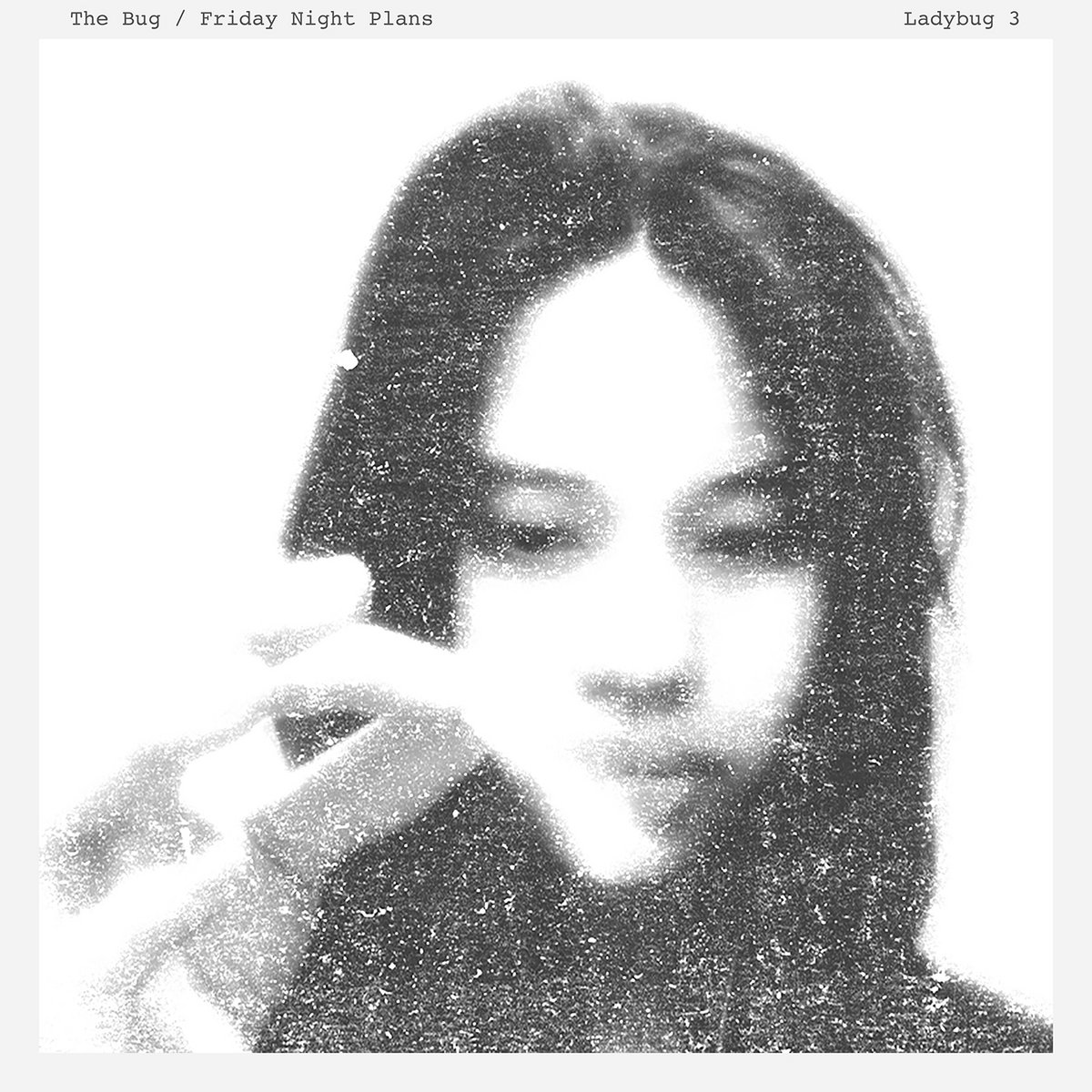 This latest installment of Kevin Martin’s impressive run of killer lady-centric collaborations brings back Tokyo-based chanteuse Masumi Yamamoto for a welcome second appearance. Billed as a “lower, slower, even more wasted transmission” than the duo’s Portishead-esque previous single “Miss U”, Ladybug 3 otherwise repeats its predecessor’s winning palette of crawling bass throb, cavernous percussion echoes, frigid-sounding hiss, and sensuous R&B-inspired vocals for another suite of lurching, slow-motion “Brutalist dub-tech” juggernauts. Unsurprisingly, the single itself (“If”) is yet another half-sultry/half-haunted gem, but the most compelling bit remains the many inventive ways in which Martin repeatedly deconstructs it into a series of cold and crawling mechanized dub nightmares.
 This fascinating and ambitious boxed set is a star-studded celebration inspired by a trove of previously unpublished cut-up works by William S. Burroughs unearthed by Burroughs scholar Alex Wermer-Colan in 2015. The project’s other central figures are composer James Ilgenfritz, poet Anne Waldman, and Thurston Moore (albeit mostly in spoken word mode). Notably, this is Ilgenfritz’s second major work devoted to Burroughs, as he previously composed a video opera for The Ticket That Exploded back in 2011. While Ilgenfritz’s Anagram Ensemble returns again here, The Travel Agency Is On Fire is otherwise a VERY different animal than its predecessor, as it features guest contributions from a number of NYC avant-garde luminaries (Jim Thirlwell, Zeena Parkins, Elliott Sharp, etc.) as well as an entire disc in which many of those contributions are compellingly chopped up and recontextualized by Ilgenfritz. While Burroughs is ostensibly the star here (for the first two discs, at least), this collection’s best moments transcend the original objective entirely and feel like nothing less than an immersive and impressionist sound collage that drops listeners directly into the heart of NYC’s mid-20th century avant-garde golden age.
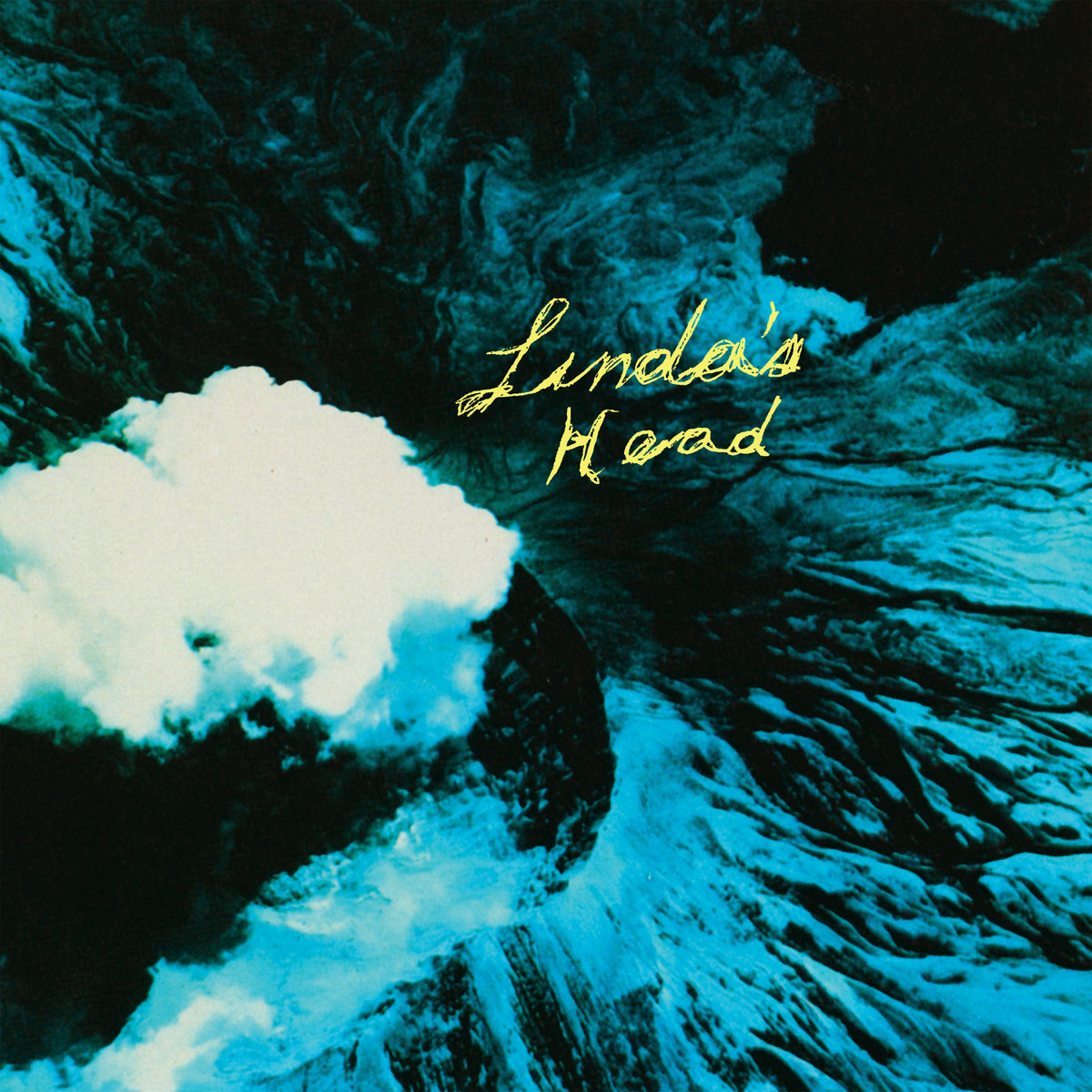 It may have taken a decade or so, but Liz Harris’s wonderful indie/jangle pop throwback trio have finally resurfaced with their follow-up to 2015’s The Original Faces. Notably, I had always figured that Helen was destined to be a one-off event, so their return is quite a pleasant surprise in general, but Linda’s Head is also a pleasant surprise in some stylistic ways as well. For one, the noisier and more raw shoegaze-inspired guitars of Helen’s debut have been largely replaced by punchy fuzz- and jangle-pop delights that recall the heyday of the great regional indie pop scenes in the Pacific Northwest, New Zealand, and Scotland. The even bigger surprise, however, is that Linda’s Head also features a handful of songs that feel like glimpses of an “alternate timeline” version of Grouper that veered a bit more towards hooks and warmth than hushed, nocturnal intimacy and shadowy atmospheres.
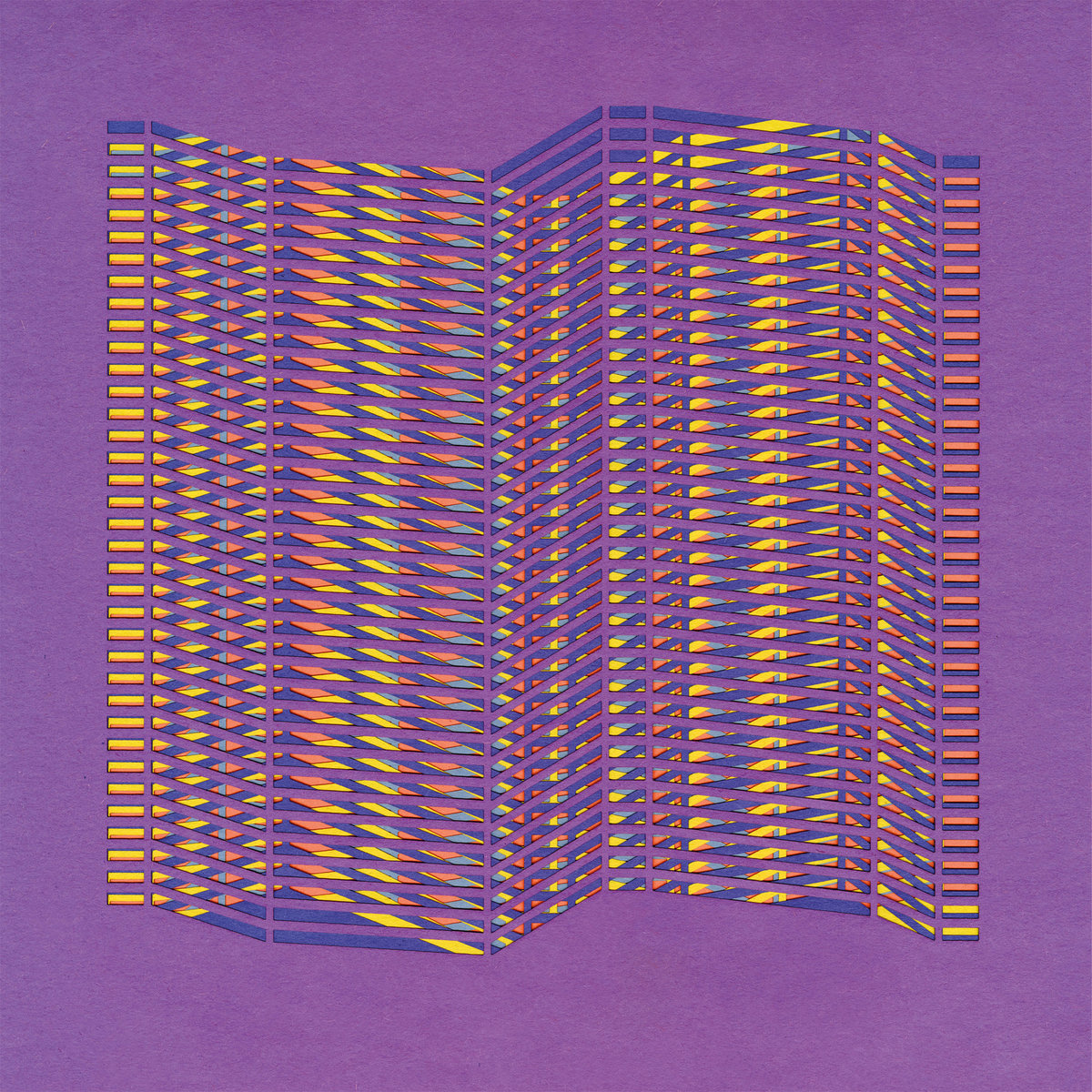 I was quite a big fan of this Swiss pianist’s solo debut (2022’s Keemuun), which is rather fortuitous because this latest album is both the spiritual and literal descendent of Keemuun’s swirling and delirious prepared piano workouts. More specifically, Figuren’s source material comes from ten intimate studio performances of pieces from Keemuun that have now been unrecognizably transformed through “deconstructed melodic elements, isolated individual tones, and extracted resonances.” While some reworkings from that process apparently surfaced on Loher’s previous album (the more dissolved and hazy Hug of Gravity), they have since undergone yet another radical transformation, as Loher ran fragments of melody through a Revox B77 tape machine and “subtly altered their pitch before digitizing and reshaping them once again.” The result feels akin to a cool tape loop album, as repetition and distressed tape effects transform Loher’s melodies into a beautifully broken, haunted, intimate, and otherworldly soundworld of lingering dissonances.
 The pipe organ has undergone quite a renaissance in recent years, as the instrument’s uniquely sonorous, room-filling sound understandably holds a lot of allure for many contemporary drone artists. However, French composer Maxime Denuc is something of an intriguing outlier in that regard. On this, his first release for Caterina Barbieri’s light-years imprint, Denuc wields a “hand-built Max/MSP sequencer” to precisely control the instrument via MIDI and unleash “dense clouds of impossible-to-play notes that ricochet backwards and forwards through history.” Notably, that last bit is a reference to Denuc’s ambitious efforts to imagine “a point of creative symbiosis between the Catholic church and the ecstatic dancefloors of the early '90s.” While blurring baroque music and progressive trance into a single unified vision is an admittedly cool trick, doing it in an entirely beatless way undeniably limits the idea’s potential a bit. Consequently, some of the strongest pieces on Club Imperial tend to be the less conceptually radical ones that nod to the more ambient/kosmische side of krautrock visionaries like Popol Vuh.
 I believe this is Andrew Chalk’s first release for Cincinnati's Students of Decay, which is a bit surprising given that the artist and the label have long shared a close stylistic sensibility. Fittingly, this auspicious occasion is celebrated with something of an unusual release in Chalk terms, as Mystical Obscurant is billed as “a rare opportunity to encounter the expansive character” of his sprawling oeuvre “in miniature.” Given how understated Chalk’s vision tends to be, however, that feature will likely be imperceptible to all but the most devoted heads. To be fair, there are certainly pieces here that recall various eras from Chalk’s four decades as one of ambient music’s most sublime and iconoclastic composers (“sacred guitar minimalism,” “smudged keys,” “environmental sound and loop-based constructions,“ etc.), yet the unifying theme has always been an unwavering devotion to quiet, simple beauty and that remains true again here.
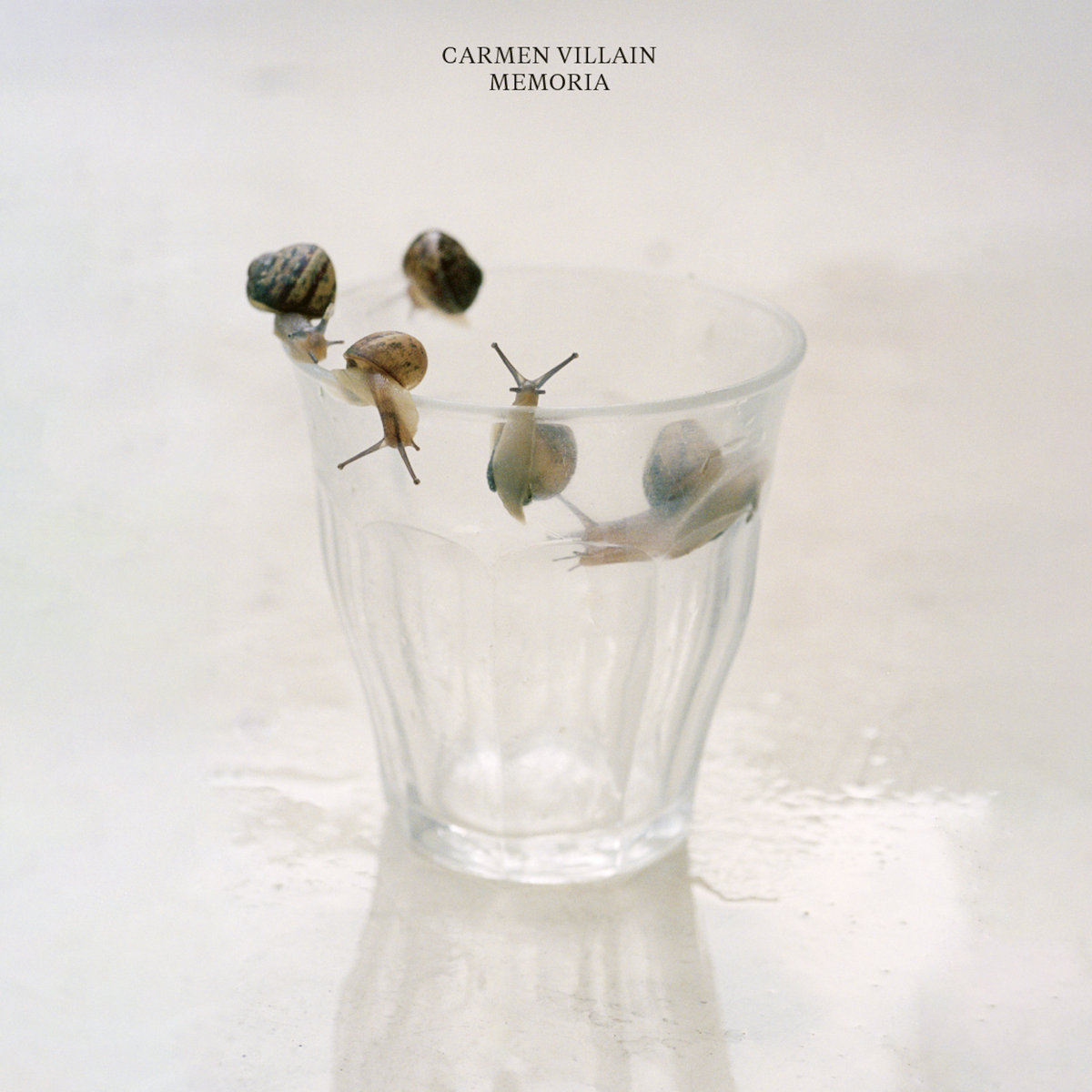 This latest statement from this shapeshifting Oslo producer is quite a radically deconstructed foray into “decelerated, spectral dub.” The album borrows its title from Apichatpong Weerasethakul’s elusive, haunting, and uncategorizable 2021 film of the same name, yet Villain was also greatly inspired by Pauline Oliveros’s writings on “internally recalled sounds inaudible to others.” As befits an album inspired by said iconic deep listening visionary, Memoria is a deeply immersive and mesmerizing bombshell that absolutely requires headphones (or at least a building-shaking soundsystem) to reveal the full scope of its beautifully nuanced, vividly realized, spatially rich, and legitimately otherworldly vision. It is also fitting that Apichatpong Weerasethakul’s “sound as memory” rumination features a bit of a science fiction twist, as pieces like “Entre Nosotros” may very well be the most boldly futuristic iteration of dub that anyone will release this year.
 This latest full-length from Alex Cobb (the man behind the Students of Decay and Soda Gong labels) is a fascinating departure from his usual fare, as it was inspired by a recent stay at a Zen Buddhist meditation retreat. The unusual title alludes to a short poem that Cobb wrote as “an attempt to transcribe the experience of intensive zazen through a simple image of a chair tied to a faucet by a length of rope.” In musical terms, the experience led him to work exclusively with a Serge Modular synth and “an almost entirely dry signal path, interrupted only by small, intentionally deployed instances of reverb.” In essence, the Serge “invites direct engagement with the slippery materiality of electricity itself,” which seems to have been an ideal match for Cobb’s newly heightened powers of patience, restraint, and control. To my ears, this is quite possibly his finest album to date, as its two longform pieces are gently psychotropic deep drone nirvana.


